
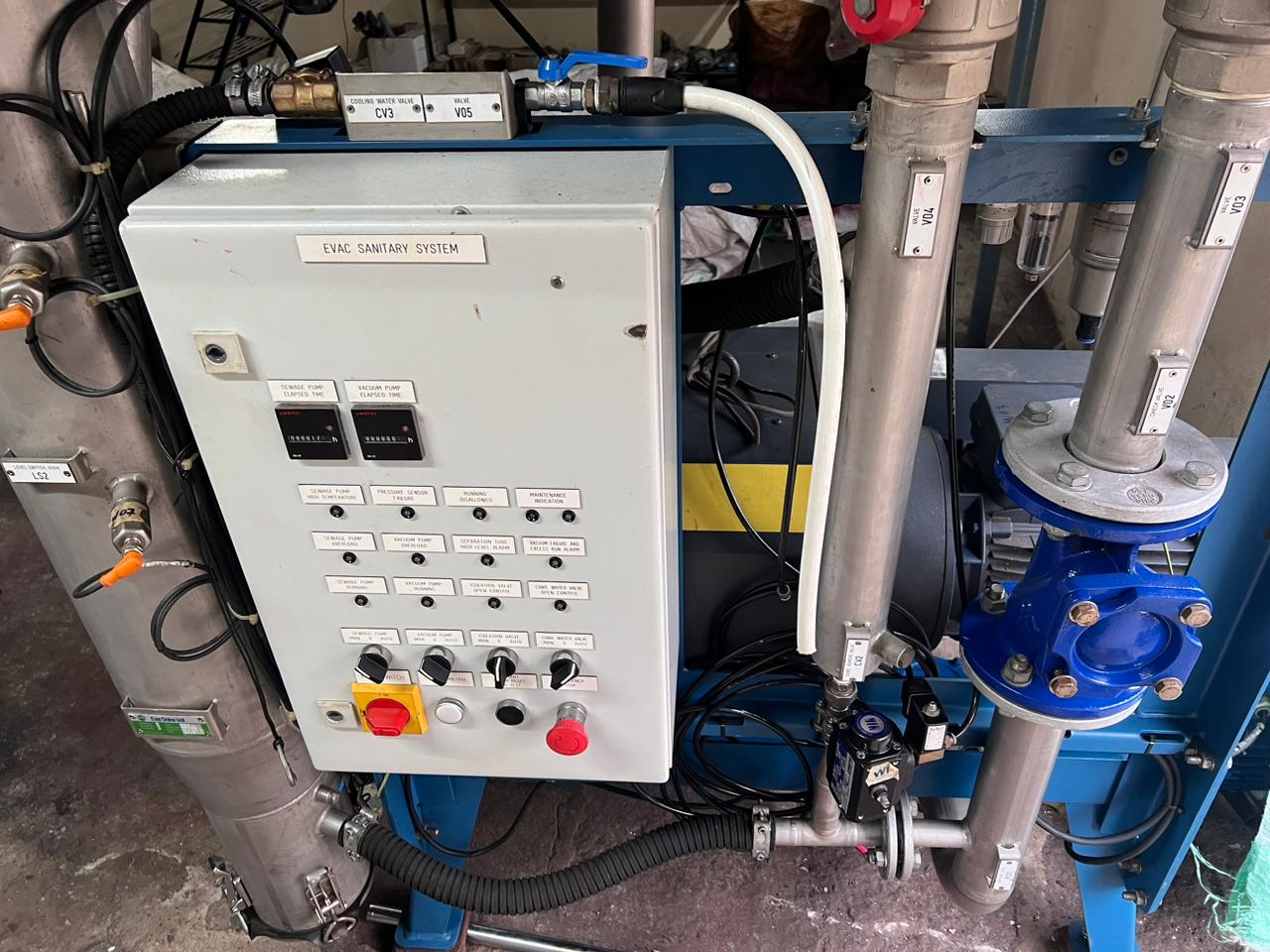
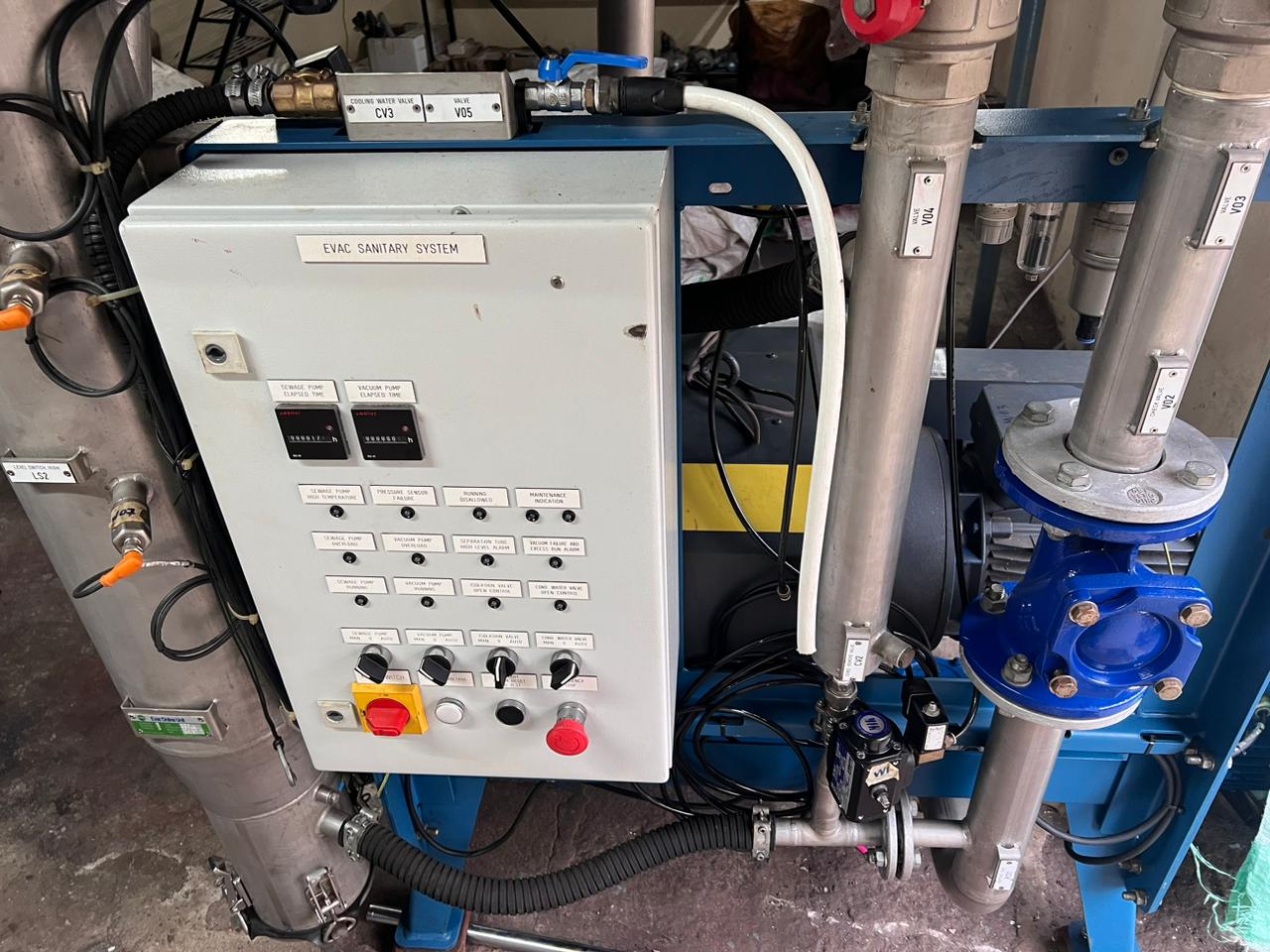
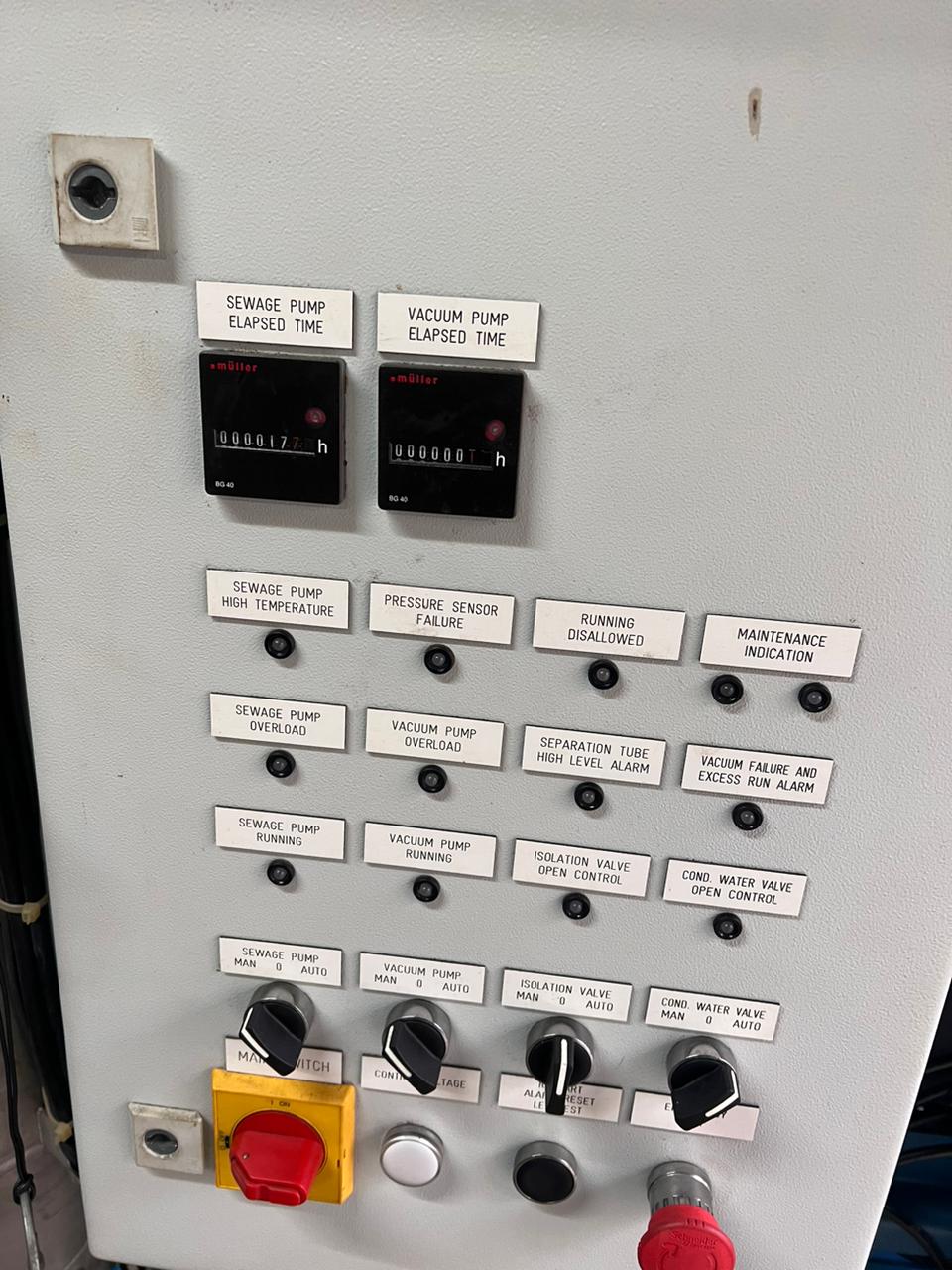
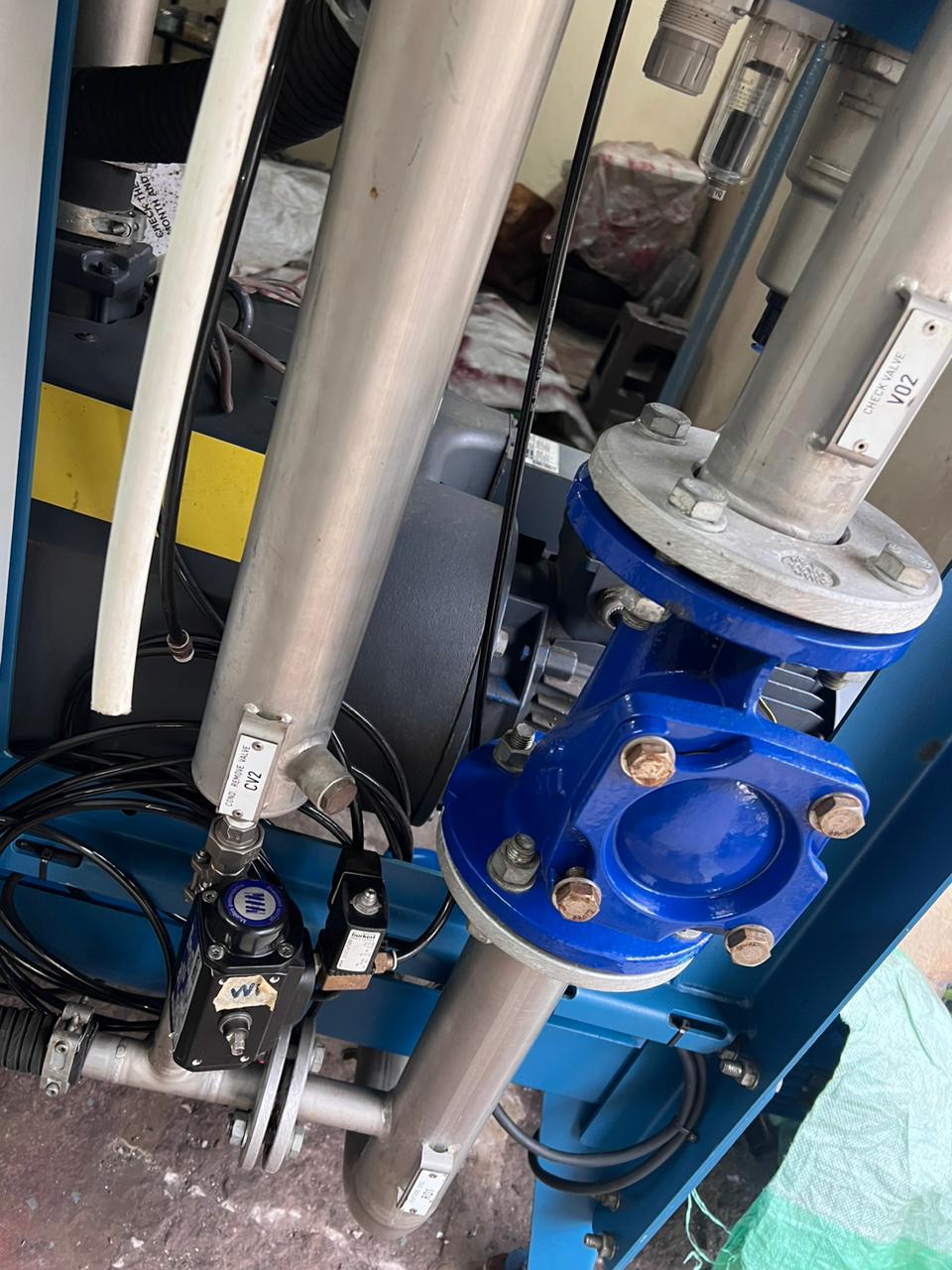
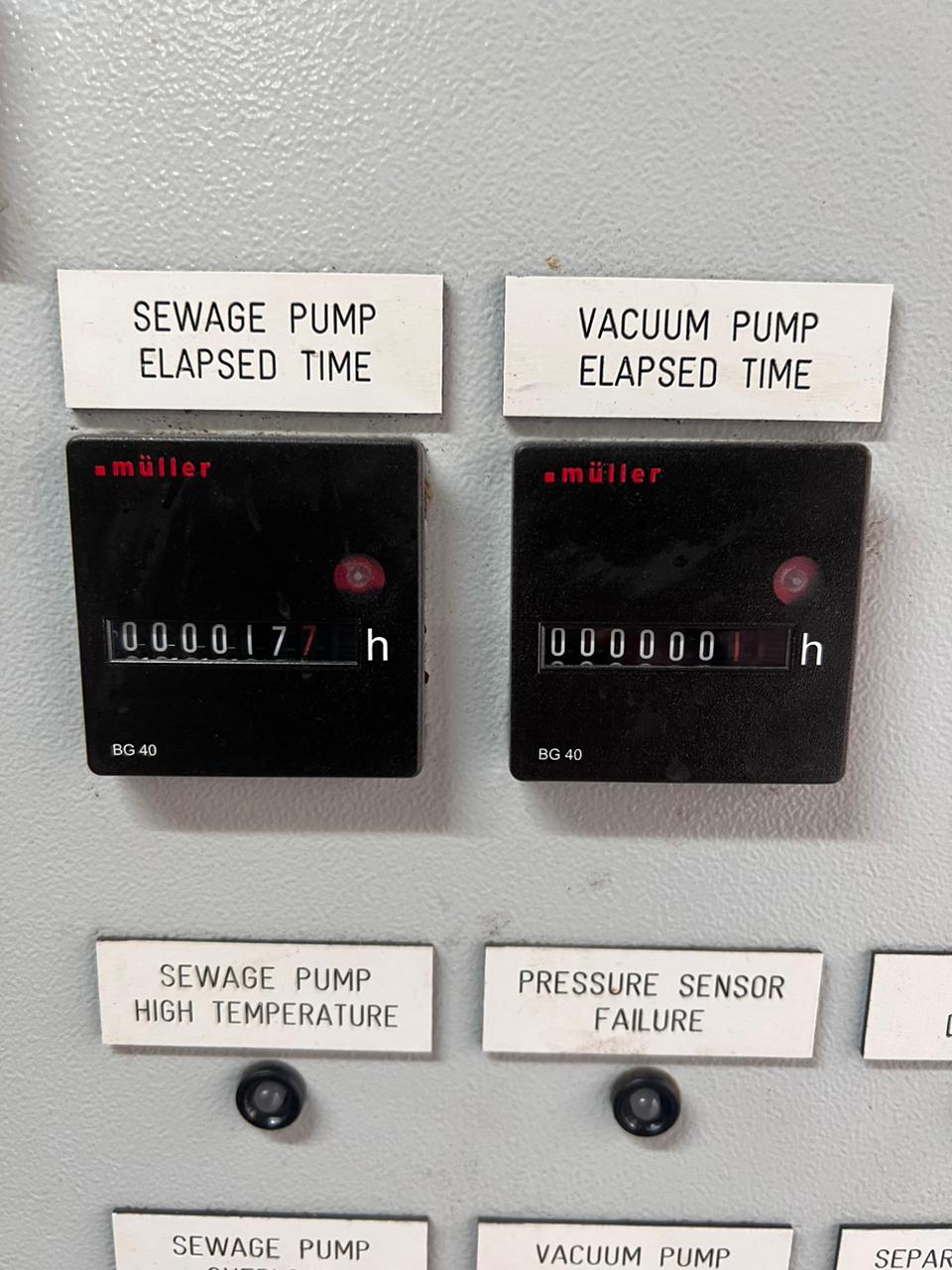
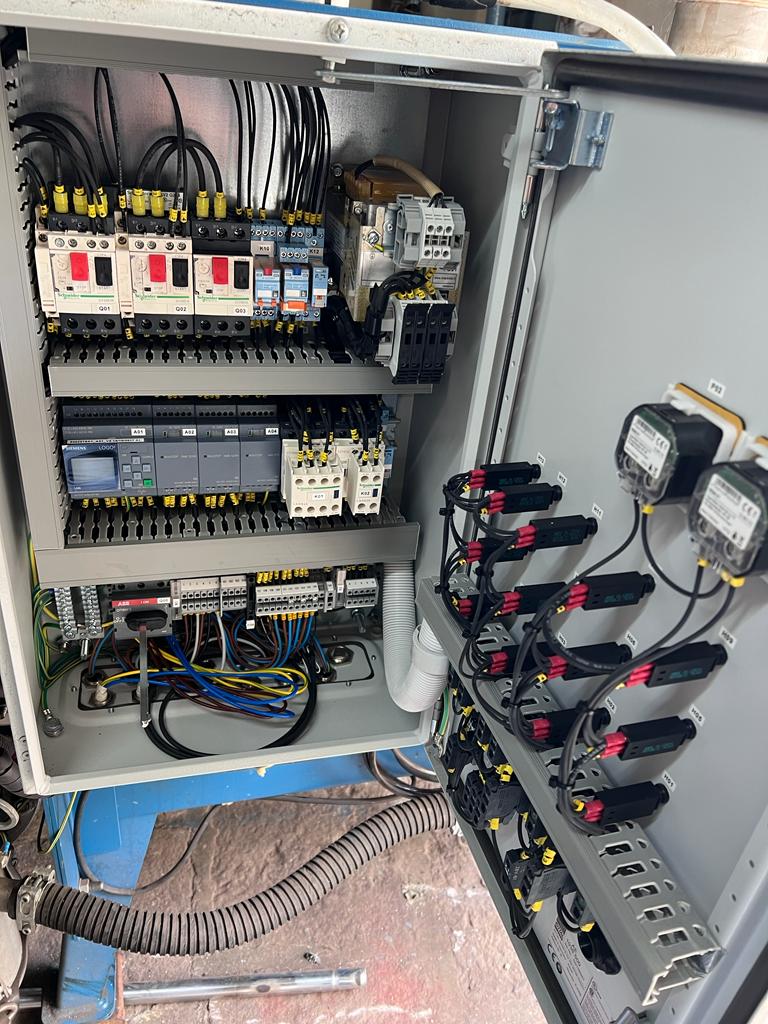
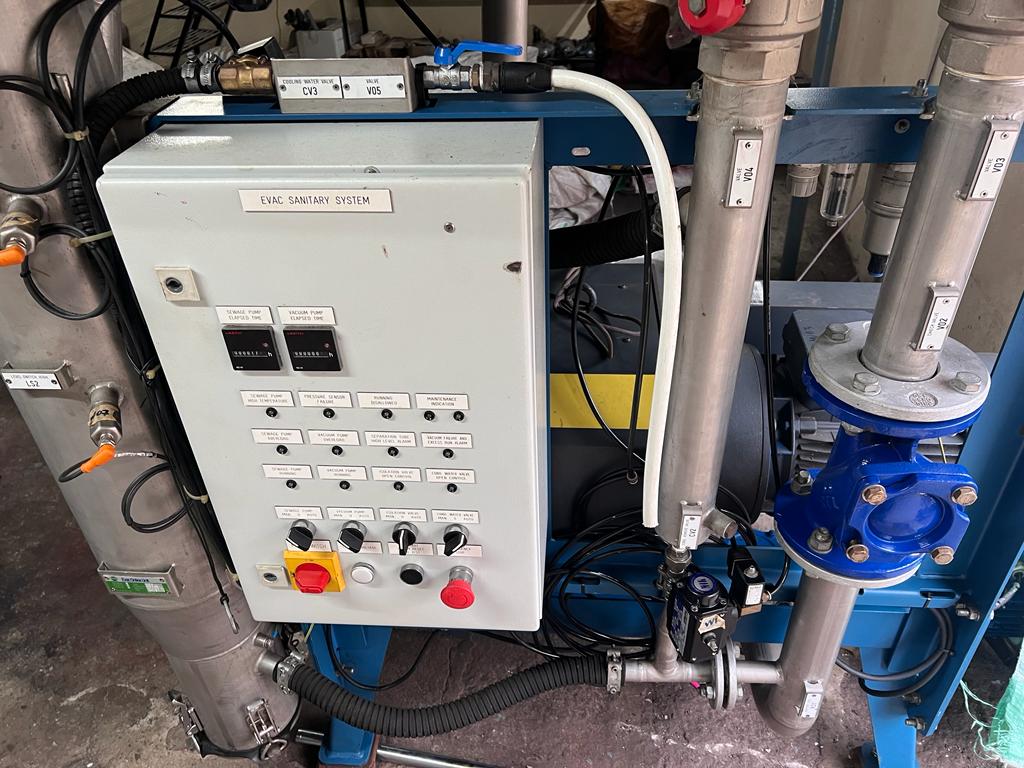
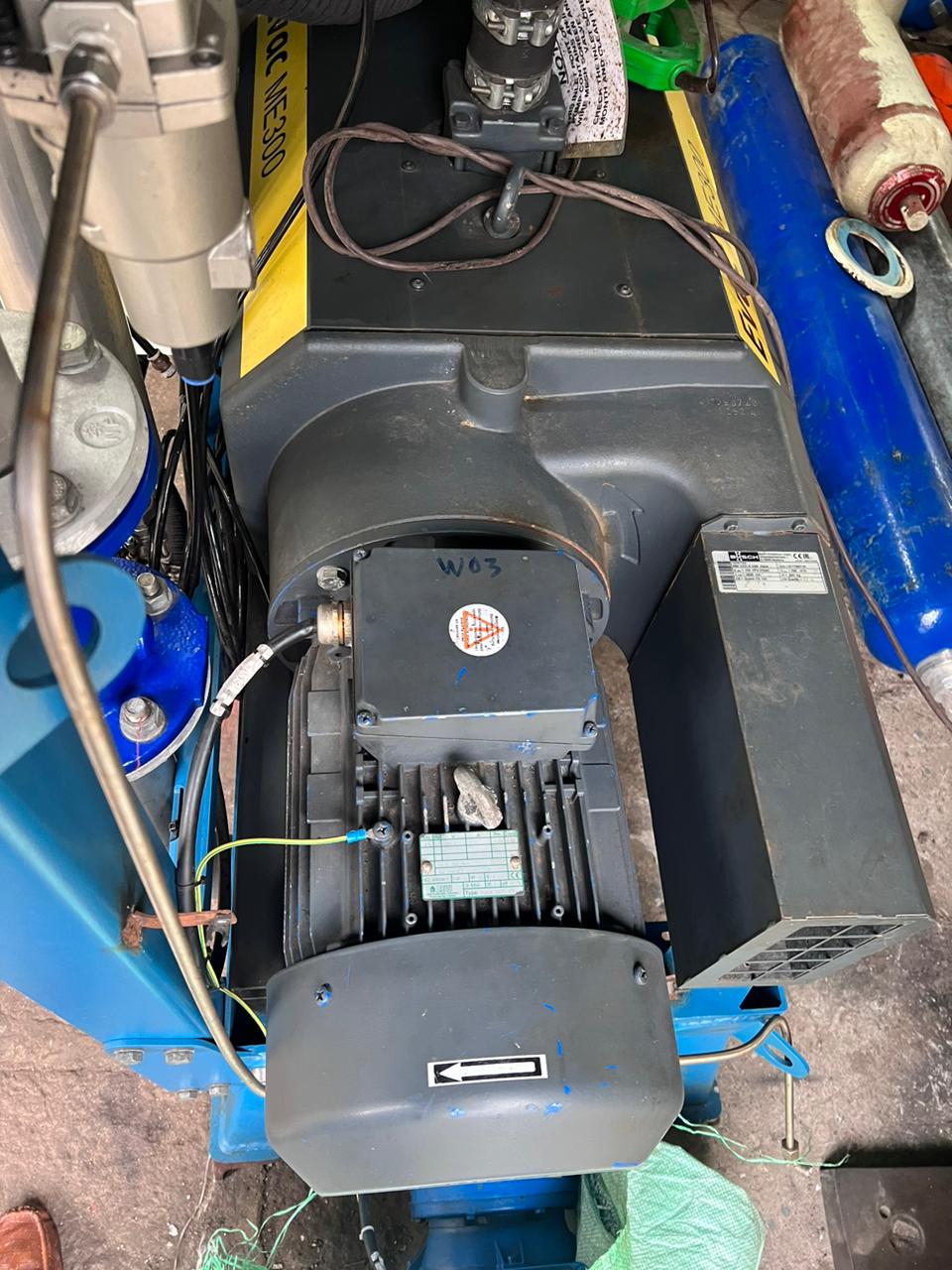
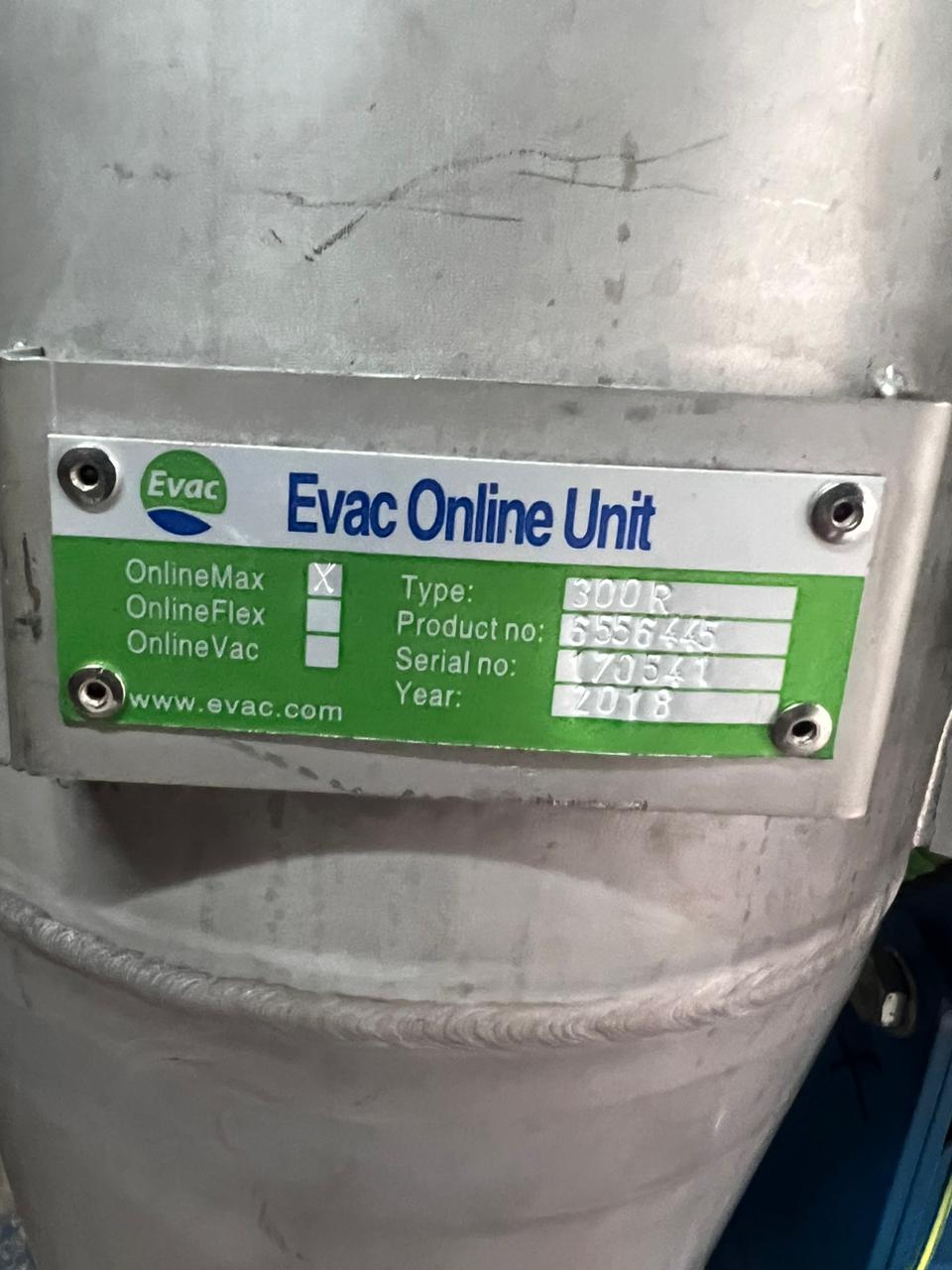
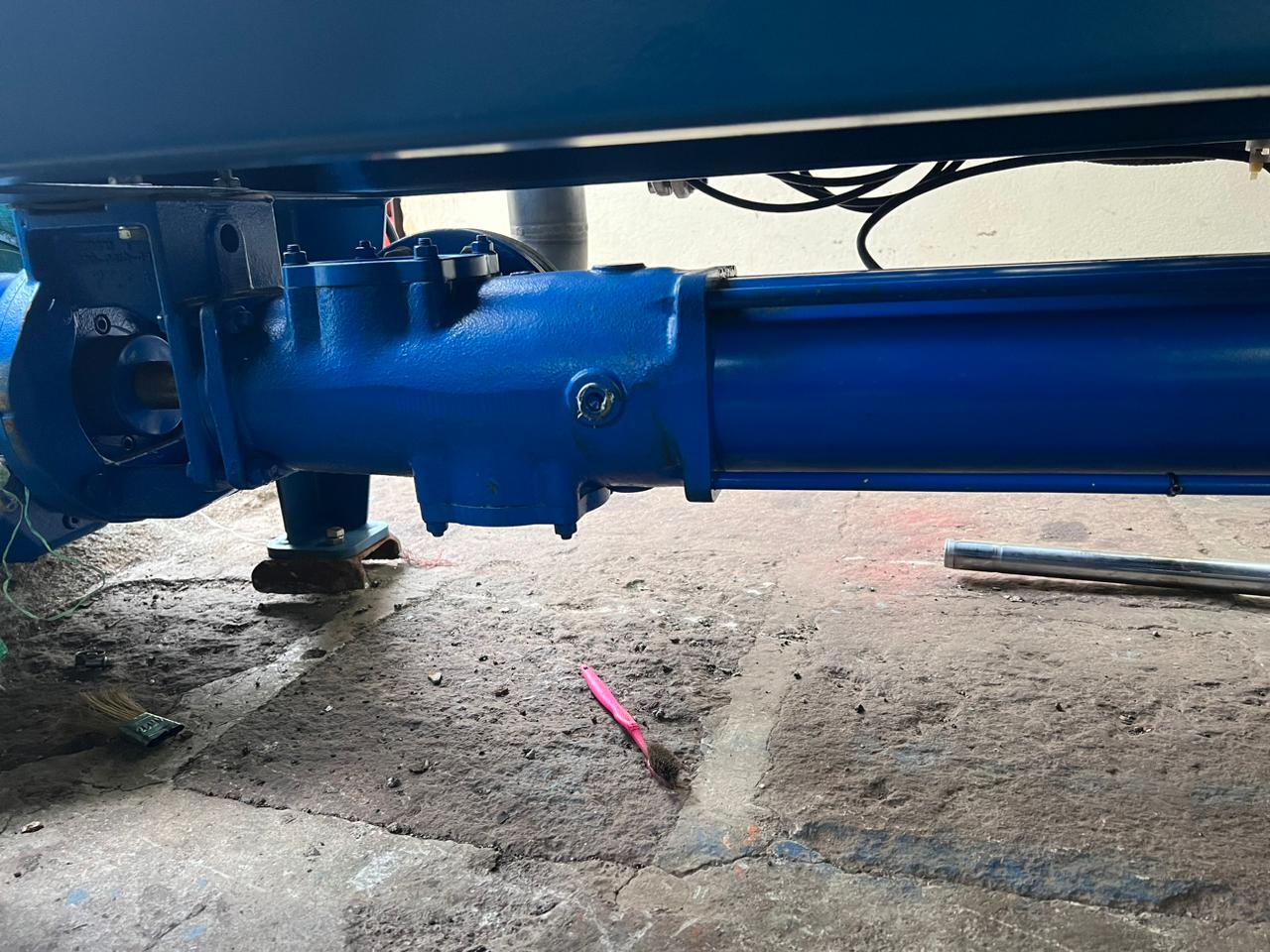
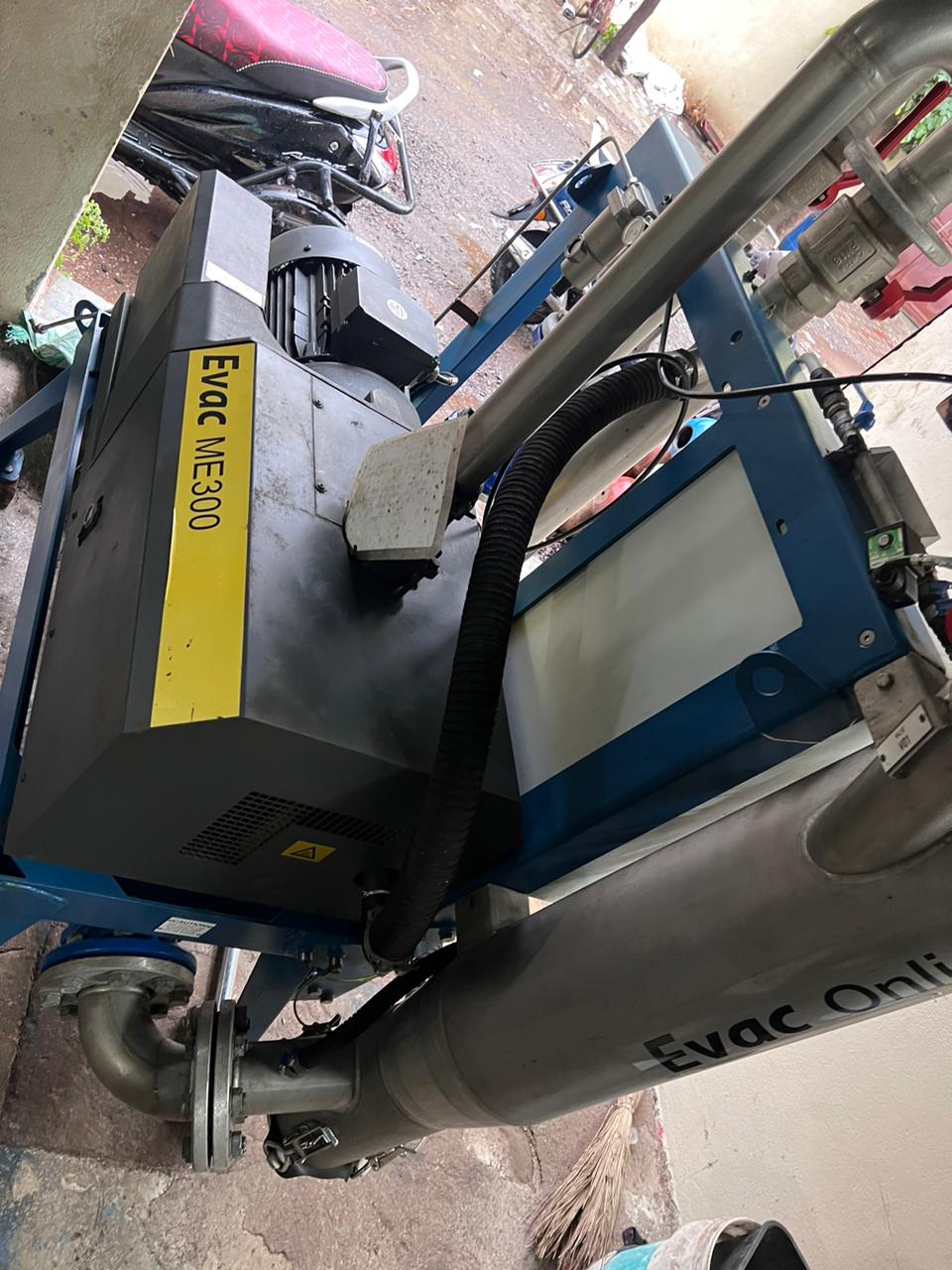
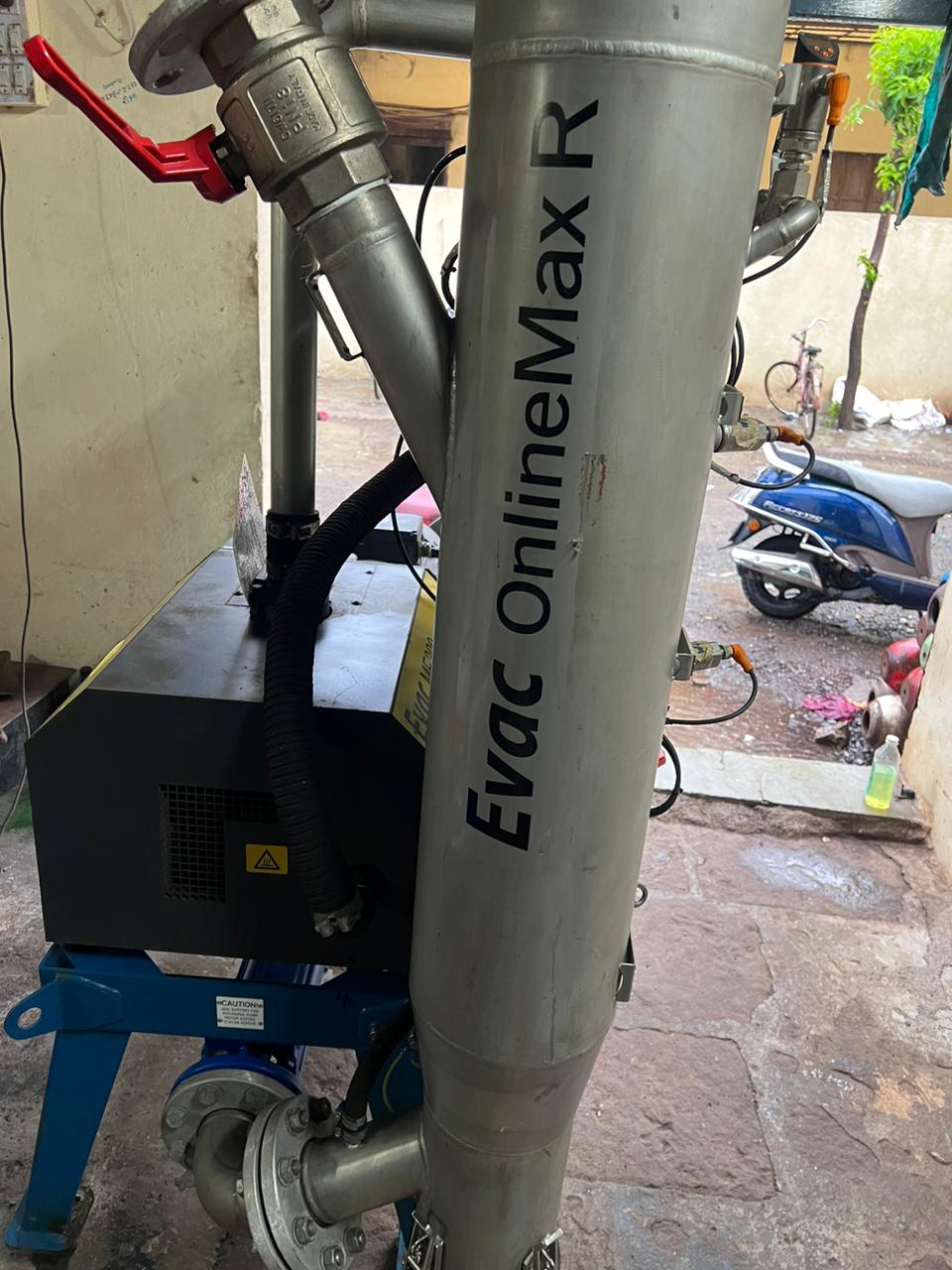
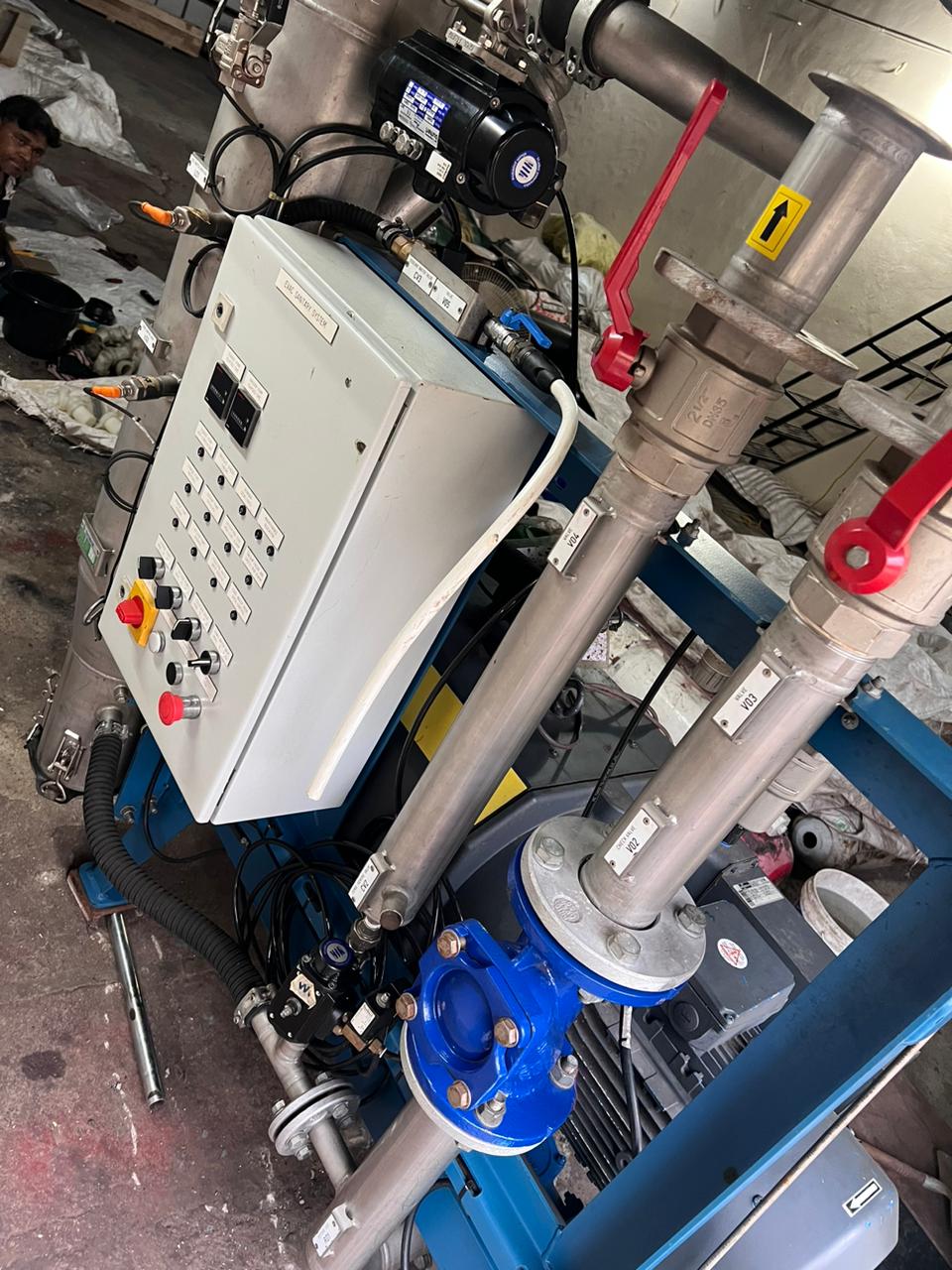
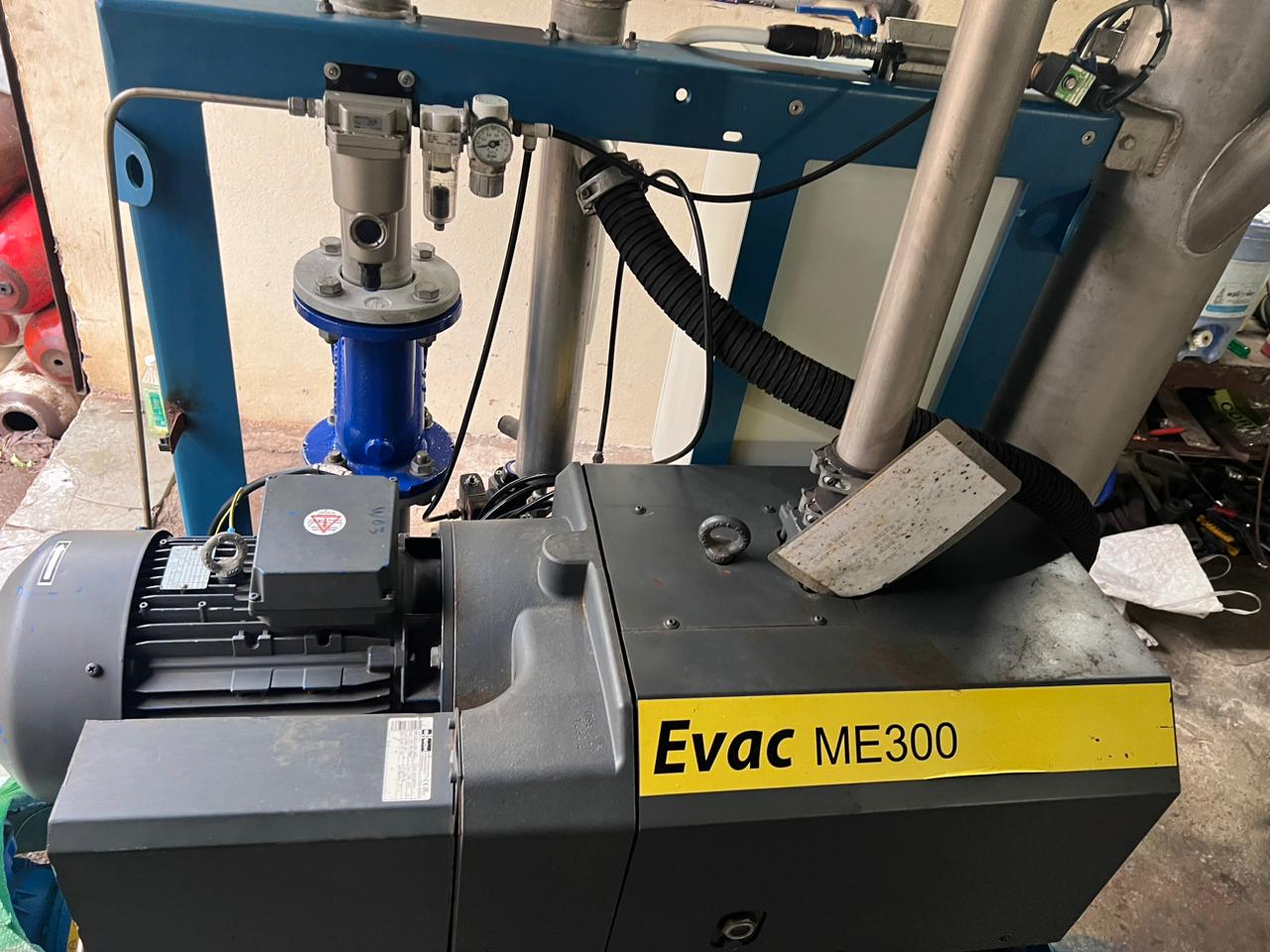
The EVAC ONLINE UNIT 300R is a high-capacity online vacuum generation and waste collection unit used primarily in vacuum toilet and sewage systems. It creates and maintains a vacuum to transport blackwater and graywater efficiently through a piping network without relying on large volumes of water.
Key Features
-
Vacuum Capacity: Around 300 m³/h (model-dependent) — suited for large systems.
-
Double-Stage Vacuum (DSV) Technology: Separates air and sewage phases, improving efficiency and reducing energy use.
-
No Need for Sealing Water: Saves fresh water compared to liquid-ring vacuum systems.
-
High Discharge Head: Can pump wastewater up to ~20 m vertically.
-
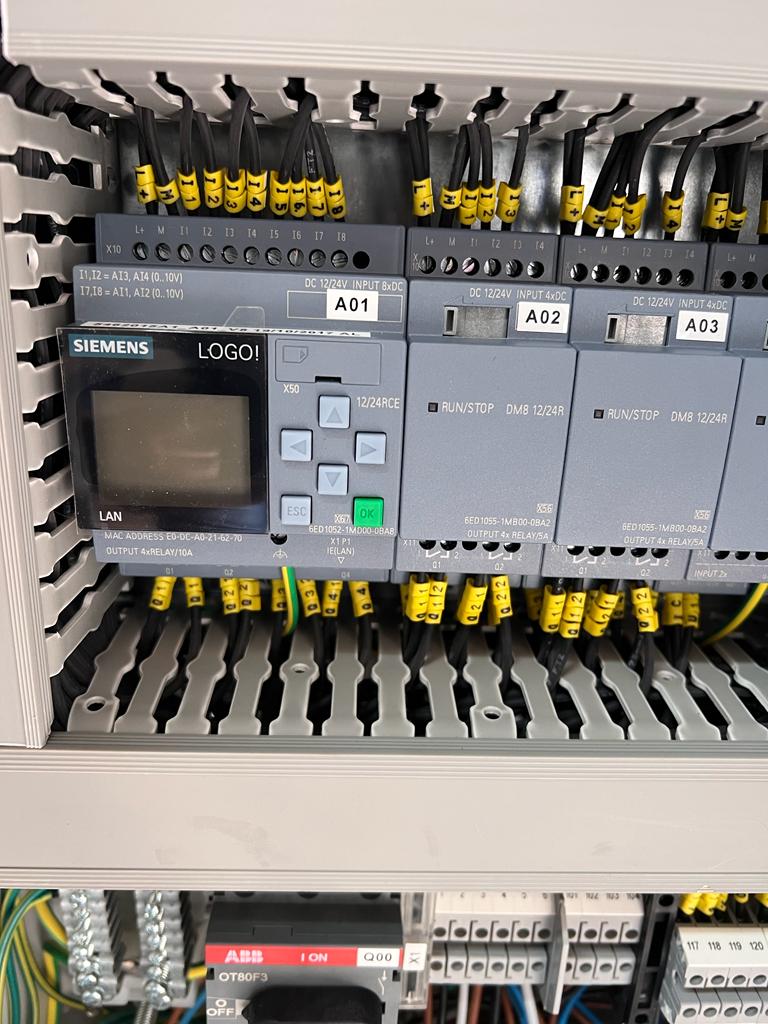
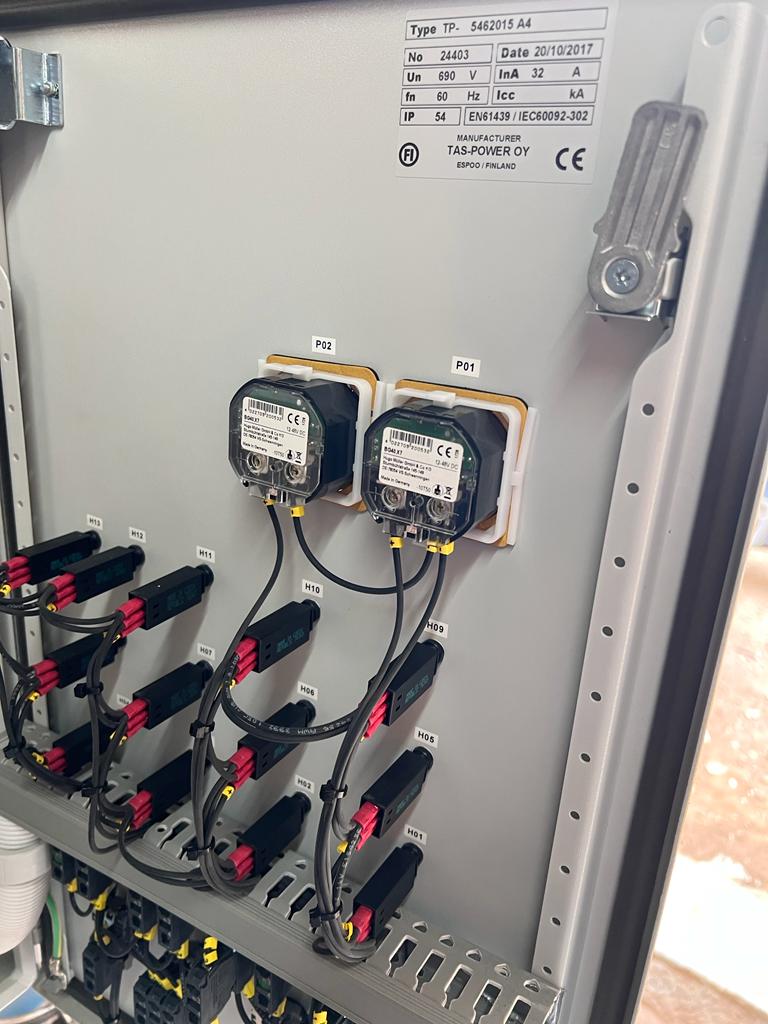
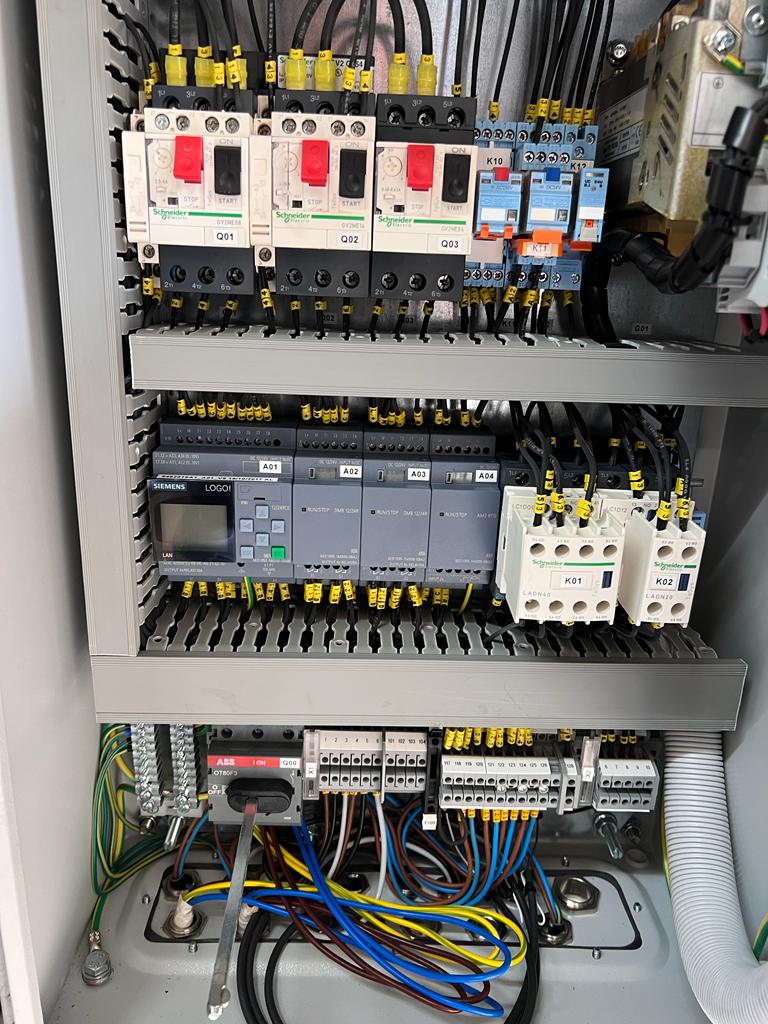
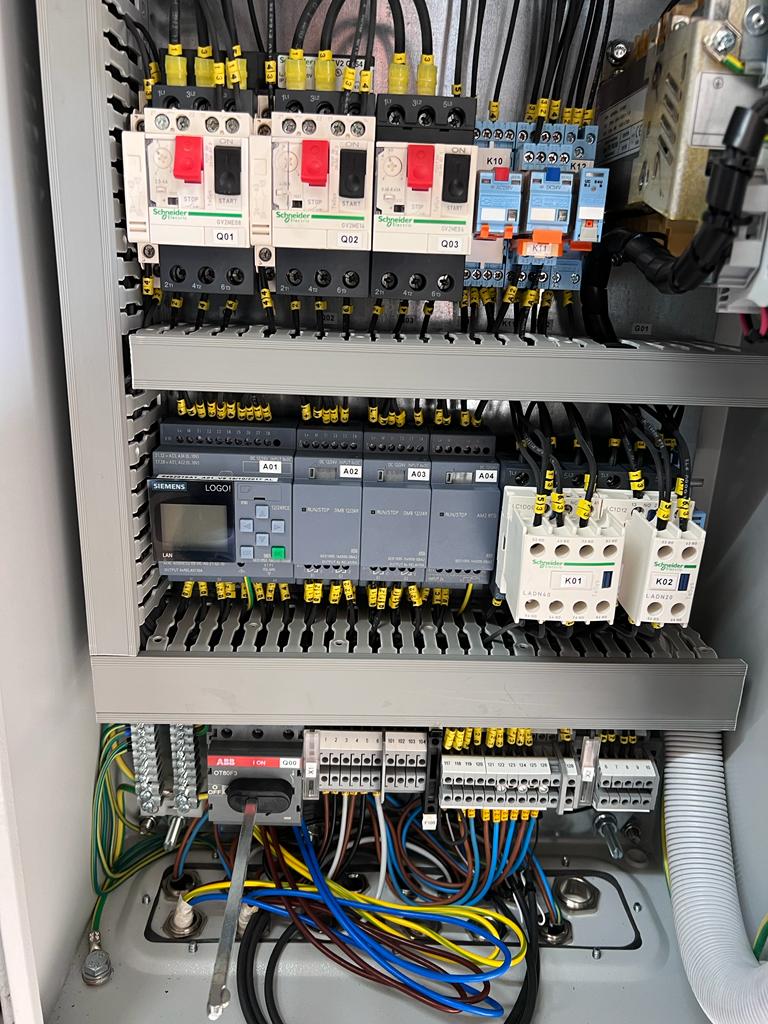
Automatic Operation: Controlled by sensors and PLC logic for continuous system vacuum and discharge.
-
Compact Footprint: Relatively small space requirement for the capacity delivered.
Marine Uses
1. Sewage Vacuum Systems
• Used onboard ships, cruise vessels, navy and commercial vessels to collect and move sewage and graywater from toilets and drains.
• Helps satisfy environmental regulations (such as IMO/MARPOL) by efficiently collecting waste before treatment or storage.
2. Integrated Marine Waste Management
• Often part of a larger marine system that includes vacuum collection, treatment plants, and wastewater handling.
• Energy-efficient and space-saving, making it suitable for large vessels with many toilets or high waste throughput.
3. Retrofit and New Installations
• Can be added to existing systems as an upgrade or fitted into new ship designs due to its flexible installation options.
Industrial & Land-Based Uses
Although mainly known for marine applications, similar Evac OnlineMax R vacuum systems are used in industrial facilities where vacuum wastewater transport is needed:
1. Large-Scale Buildings
• Used in buildings with vacuum toilet systems (e.g., hotels, hospitals, campuses) to minimize water use and improve efficiency.
2. Wastewater Handling Plants
• In facilities requiring compact, efficient vacuum-based waste handling, particularly where gravity flow isn’t feasible.
How It Works (Operation Basics)
-
Vacuum Generation: The unit maintains negative pressure in the system.
-
Waste Collection: When a toilet is flushed or wastewater enters a vacuum line, the pressure differential moves it toward the vacuum unit.
-
Phase Separation: Air and waste are separated internally; air is released while sewage is pumped for treatment.
-
Automatic Control: A control PLC and sensors manage vacuum levels and discharge cycles.
Why It’s Used
✔ Energy Efficient — lower power use than traditional ejector/vacuum systems.
✔ Water Saving — no sealing water needed.
✔ Reliable & Automatic — minimal operator intervention.
✔ Flexible — works for new builds or retrofit projects.