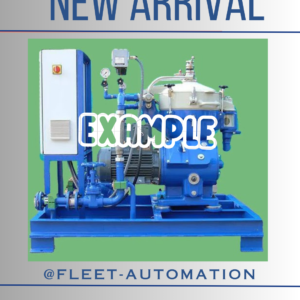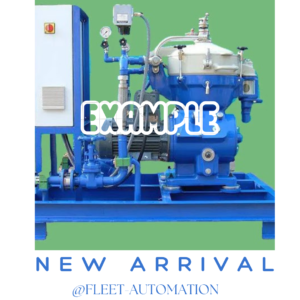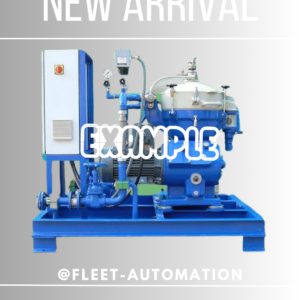
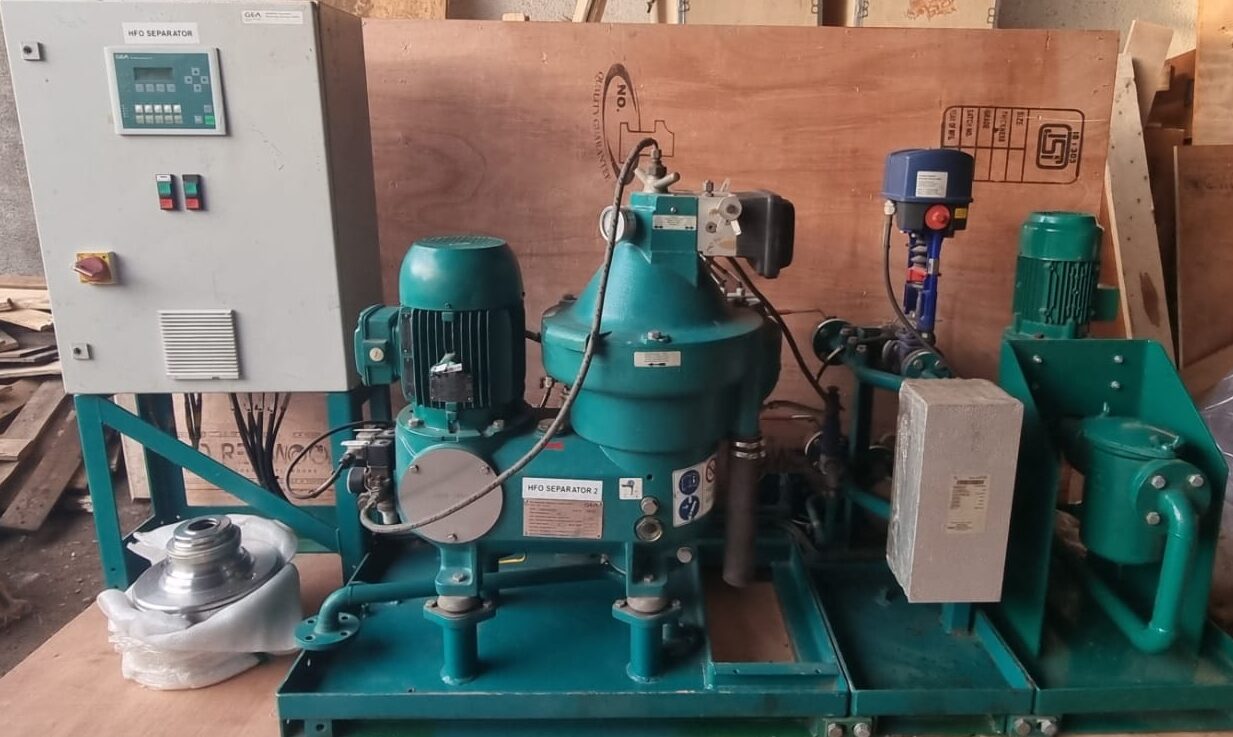
The GEA Westfalia OSA 35-02-066 is a self-cleaning disc-type centrifugal separator (oil purifier/clarifier). It uses a high-speed rotating bowl with stacked discs to separate mixed liquids and solids.
GEA Westfalia OSA 35-02-066
Purpose:
It’s designed to clean contaminated oils by removing:
🔹 Water
🔹 Dirt and sludge
🔹 Other solid contaminants from oil streams.
Operating Principles:
-
Centrifugal force separates liquid phases and solids.
-
Light phase (clean oil) is discharged via a centripetal pump.
-
Heavy phase (water, sludge) is discharged through a regulating ring or by gravity.
Key Features:
✔ Self-cleaning disc stack for continuous operation.
✔ Can operate as a purifier (removing water + solids) or a clarifier.
✔ Typically built with a high-speed bowl (~6,550 – 6,600 rpm).
✔ Includes feed, light-phase pump, and heavy-phase discharge system.
Typical Specifications (approximate):
-
Max bowl speed: ~6,550 – 6,600 rpm.
-
Rated capacity: often ~4,000 – 12,000 L / h depending on setup and feed characteristics.
-
Motor usually ~15-20 HP .
Industries Where Used:
Marine, power generation, oil & gas, biodiesel, petroleum, chemical, pharmaceutical, fermentation, and general industrial fluids.
Uses in Marine Department
In marine environments, the OSA 35-02-066 is mainly used for oil purification and conditioning to protect engines and auxiliary systems:
🔹 Fuel Oil Purification
Before fuel oil goes to main and auxiliary engines, it must be cleaned from water and solids.
This prevents injector damage, reduces corrosion and ensures efficient combustion.
🔹 Lube Oil Clarification
Lubricating oil for gearboxes, generators, turbines, and main engines must be free of contamination to minimize bearing wear and extend service life.
🔹 Hydraulic Oil Cleaning
Hydraulic systems (e.g., steering gear, cranes) require clean oil to avoid pump and valve damage due to abrasive solids.
🔹 General Oil Conditioning
It can treat many shipboard oils like diesel, heavy fuel oil (HFO), biodiesel blends, and other process oils — increasing equipment reliability.
Uses in Industrial Department
In industrial sectors, the OSA 35-02-066 separator’s functions expand beyond marine to general liquid treatment:
Oil Treatment in Power Plants
-
Cleaning fuel oils for gas turbines and diesel generators to prevent corrosion and blade wear.
-
Improves the reliability of turbine and engine systems.
Biofuel, Crude Oil, and Heavy Fuel Treatment
Effective at removing water and solids from biofuel blends, heavy fuel oils, and crude fractions before downstream use or refining.
Oil-Water-Solids Separation
Separates liquid mixtures containing oil, water, and particulates — enabling disposal or recycling of these streams.
Industrial Machinery Oil Purification
Purifies hydraulic oils, lubricants, waste oils, and cooling oils used in manufacturing, petrochemical plants, and refinery processes to extend equipment life and boost uptime.
Specialized Industries
It is also used in pharmaceutical, fermentation, and chemical industries for separating liquids and solids in process streams — illustrating its versatility beyond lubrication and fuel applications.
How It’s Used in Practice (General Operation)
Here’s a general practical description of how the separator is operated (marine & industrial):
🔹 Feed Preparation
→ The oil feed should be pre-heated if required (especially viscous fuel oils).
→ Remove large debris with coarse filtration before feeding.
🔹 Start-Up
-
Start the feed pump so contaminated oil enters the separator.
-
Start the separator motor to bring the bowl to operational speed (~6,550 rpm).
-
Allow temperature and flow to stabilize.
🔹 Separation Process
→ The centrifugal bowl rapidly spins incoming oil; the centrifugal force separates it into phases.
→ Clean oil (light phase) exits via the pump under pressure.
→ Water and sludge (heavy phase) exit through the regulating ring or discharge port.
🔹 Monitoring
During operation, regularly monitor:
✔ Oil flow rate
✔ Bowl speed
✔ Clean oil clarity
✔ Contaminant discharge activity
🔹 Shutdown
-
Stop the feed pump — let remaining oil be processed.
-
Stop the separator motor once the bowl is clear of feed.
-
Perform maintenance and cleaning per the manufacturer’s procedure.
Benefits Across Marine & Industrial Uses
✔ Removes water and solids efficiently.
✔ Can operate continuously with self-cleaning action.
✔ Protects engines, turbines, and other rotating equipment.
✔ Reduces maintenance costs and downtime.
✔ Versatile across fuel, lube, hydraulic and industrial process oils
We are not an official distributor of GEA Westfalia Spares.